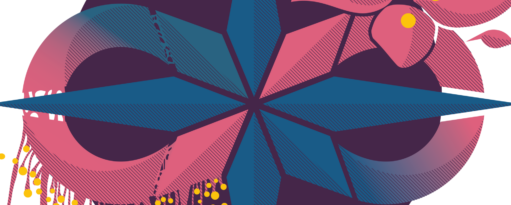
Light Omens is a science fantasy tabletop RPG about survival, identity, hope, and the people who refuse to surrender to despair.
There are a lot of dark fantasy worlds where everything is already lost.
Worlds where suffering exists only to look cool. Worlds where despair becomes aesthetic. Worlds where hopelessness is treated like maturity.
Light Omens was never meant to be that kind of setting.
I created Light Omens because I wanted a science fantasy world that reflected something more personal. Not just survival against monsters or catastrophic events, but survival against systems that slowly consume identity, memory, hope, love, and the belief that tomorrow can become something better than today.
At its core, Light Omens is a tabletop roleplaying game about people who refuse to give up.
Even when the world gives them every reason to.
A World Built From Inherited Weight
A lot of the emotional foundation behind Light Omens comes from my own experiences growing up as a Black man in America.
Not only my own experiences, but inherited ones.
The kind of trauma passed through generations quietly. The kind people carry in how they speak, how they move through certain spaces, how they learn to remain safe by becoming smaller versions of themselves when necessary.
I grew up outside the environments many people expect when they hear those stories. I was raised away from the neighborhoods my family came from, in places that often felt culturally isolating, politically hostile, and socially uncomfortable in ways that are difficult to explain unless you have lived them yourself.
I learned how to code-switch early.
How to become acceptable.
How to perform safety.
How to remain aware of how visible I was at all times.
And over time, I became fascinated by what those systems actually do to people emotionally and spiritually.
Not just racism itself, but exhaustion. Erosion. The slow pressure of environments that teach people survival often requires silence, restraint, compromise, or self-denial.
That became one of the emotional foundations of Light Omens.
Because I realized that some systems do not destroy people all at once.
Some consume people slowly.
The Light Eaters
In Light Omens, the world of Hiraeth was nearly destroyed by entities known as the Light Eaters.
But the Light Eaters are not simply monsters.
They are manifestations of consumption without meaning. Forces that feed upon hope, identity, memory, faith, love, and emotional resilience itself.
They do not simply kill people.
They make people stop believing survival matters.
That distinction was important to me.
Because despair is rarely immediate in real life. Most people are not defeated in a single moment. They are exhausted over time. Worn down gradually by systems, expectations, fear, isolation, violence, grief, instability, or inherited trauma.
The Light Eaters represent that emotional and systemic erosion.
They represent the kinds of pressures that convince people they should stop caring. Stop fighting. Stop hoping. Stop believing they deserve better futures.
And Hiraeth itself was built around asking a difficult question:
What happens to a world after that kind of collapse?
Not just physical collapse.
Cultural collapse. Spiritual collapse. Emotional collapse.
What survives afterward?
Why Seekers Matter
That question is why Seekers exist.
Seekers are not chosen heroes.
They are not rulers, prophets, or legendary warriors destined to save the world through greatness alone.
They are ordinary people who continue stepping forward when something dangerous, broken, or unresolved can no longer be ignored.
That matters deeply to me because real perseverance rarely looks heroic while it is happening.
Most people who endure impossible situations are not treated like heroes while they are surviving them. They are simply trying to continue living. Trying to protect their communities. Trying to preserve parts of themselves that systems, institutions, or circumstances constantly pressure them to abandon.
Seekers embody that kind of persistence.
Some recover lost histories before they disappear forever. Others protect isolated communities surviving beneath the remnants of older civilizations. Some negotiate fragile peace between groups struggling over identity, survival, and conflicting visions of the future.
What unites them is not destiny.
It is choice.
The choice to keep caring.
The choice to keep moving.
The choice to continue believing the future can still become something worth protecting.
Hopepunk In A Wounded World
People often describe Light Omens as grimdark because the setting is dangerous, unstable, and shaped by catastrophe.
But emotionally, I think it is much closer to hopepunk.
The world is wounded.
Civilizations collapsed. Entire cultures fractured. Dangerous technologies and ancient systems continue reshaping everyday life in unpredictable ways. The people of Hiraeth inherited the consequences of generations that pushed power beyond safe understanding.
But the setting is not about surrendering to despair.
It is about what people choose to preserve despite it.
Communities still exist.
People still fall in love. Raise families. Tell stories. Protect one another. Preserve traditions. Argue about what the future should become. Build homes beneath broken skies. Carry memories forward. Search for meaning inside worlds that constantly threaten to consume it.
Hope in Light Omens is not naive optimism.
It is resistance.
And resistance always costs something.
That idea shapes nearly every part of the game.
Why Consequences Matter
One of the core design principles behind Light Omens is that actions carry consequences.
Not because the game wants to punish players, but because difficult choices matter more when they carry emotional weight.
The world pushes back.
Sometimes protecting one community creates instability somewhere else. Sometimes survival requires compromise. Sometimes preserving hope means sacrificing certainty, comfort, or safety.
I wanted players to feel that tension.
Because perseverance becomes meaningful precisely because it is difficult.
That philosophy also influenced mechanics like Truth.
Truth was inspired partly by code-switching and performative survival. By the ways people learn to adapt themselves socially depending on the environments around them. By the emotional pressure of constantly navigating who you are allowed to be in certain spaces versus who you actually are underneath.
In Light Omens, identity is not abstract.
It is survival.
And systems that consume identity eventually consume communities too.
What Light Omens Is Really About
Underneath all the worldbuilding, monsters, Grim Light, factions, ruins, and cosmic dangers, Light Omens is ultimately about people trying to remain human in a world that constantly pressures them not to.
It is about inherited trauma and inherited resilience existing at the same time.
It is about surviving systems designed to exhaust people emotionally, spiritually, culturally, and materially.
It is about preserving memory when forgetting becomes easier.
It is about refusing to surrender hope even when the future feels uncertain.
Most importantly, it is about the belief that perseverance itself can become transformative.
Not because people are guaranteed victory.
Not because things always become fair.
But because refusing to stop caring still matters.
The Future Of Hiraeth
The world of Hiraeth is still becoming.
Its future is unresolved.
Different factions struggle over what deserves preservation, what deserves transformation, and what humanity must become in order to survive the future that remains ahead of it.
And honestly, I think that mirrors the real world more than many fantasy settings allow themselves to.
People inherit broken systems they did not create.
People survive histories they did not choose.
People carry burdens older than themselves.
And still, they continue building lives anyway.
That is what Light Omens exists to explore.
Not despair.
But the difficult, exhausting, meaningful act of continuing despite it.
Because sometimes hope is not found in certainty.
Sometimes hope is simply refusing to disappear.